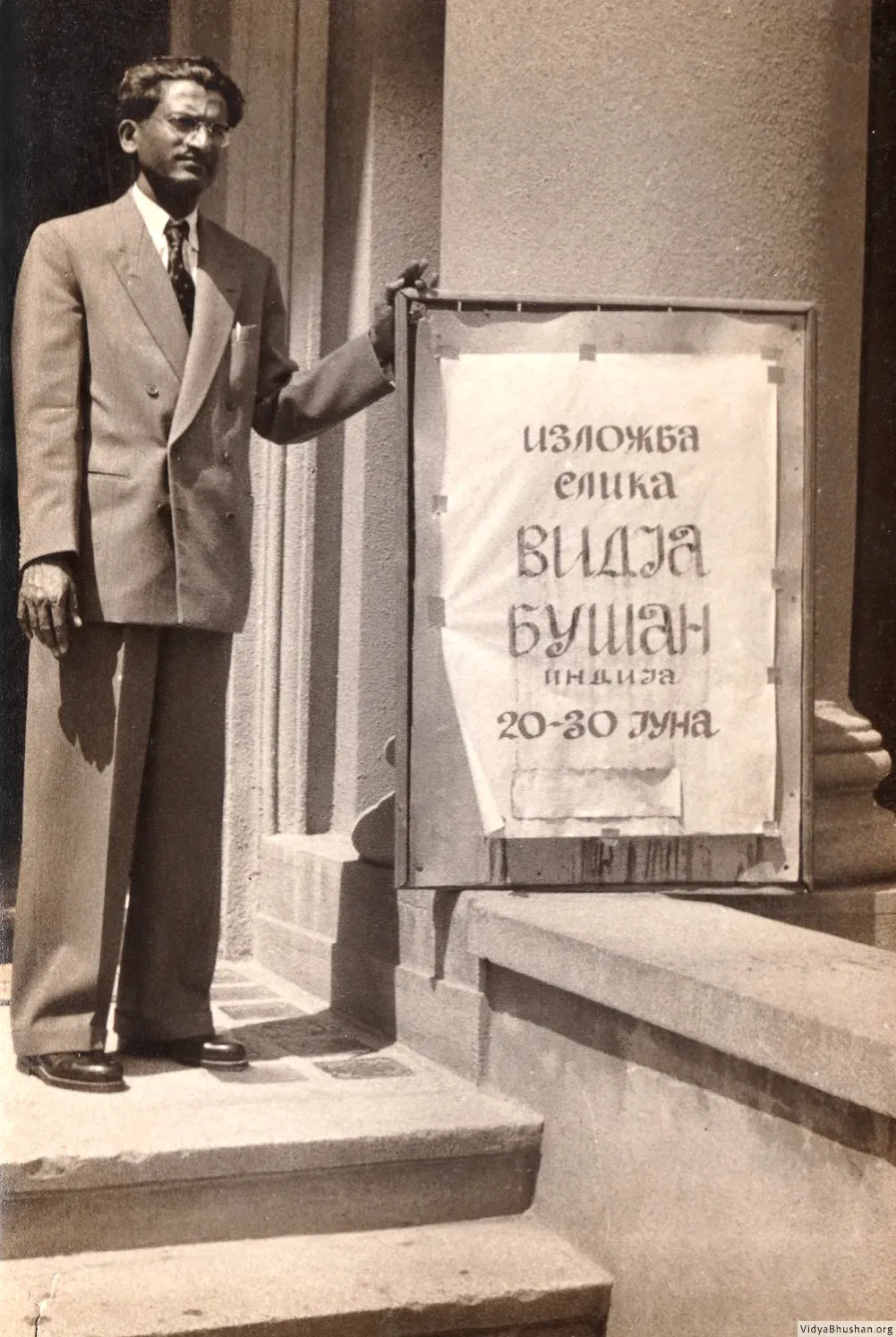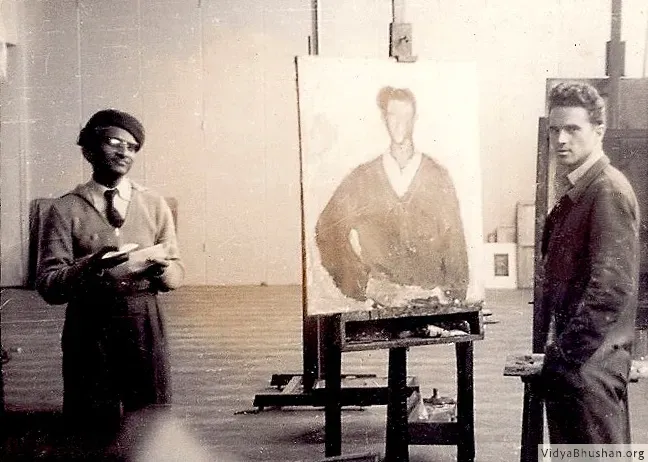
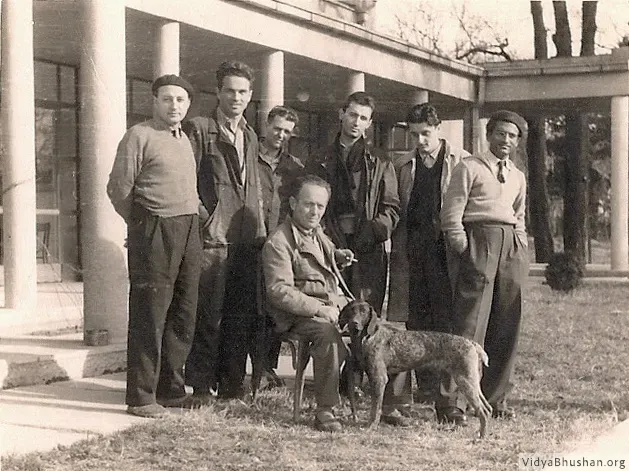
Belgrade, Yugoslavia
Vidya Bhushan was on a year’s cultural scholarship at the Belgrade Academy of Art from 1954-55 for a Diploma in Mosaic Mural and Fresco Painting in the atelier of the Master Artist Milo Milunovic who along with Petar Dobrovic and Toma Rosandic founded the Belgrade Academy of Arts in 1937. He had studied in Florence under the apprenticeship of Augusto Giacometti and lived in Paris before returning to Belgrade. Social Realism was the dominant school after World War II with the rise to power of the Communist Party of Yugoslavia under Josip Broz Tito. However, this period did not last long and the Tito-Stalin split of 1948 helped along artists who had begun to break free of the constraints of the Communist’s cultural influence led by figures such as Milunovic and Petar Lubarda. Milunovic was a member of The Twelve and The Independents artist groups who had brought into the Yugoslavian art scene modernist influences from Europe. Cezanne was his great inspiration. Milunovic depicted objects as elements in the spatial opening up and the construction of a painting, analysing the painted surface through tones, half tones, seemingly disorganised brushstrokes, rendering details superficially, yet changing the optical sensation.
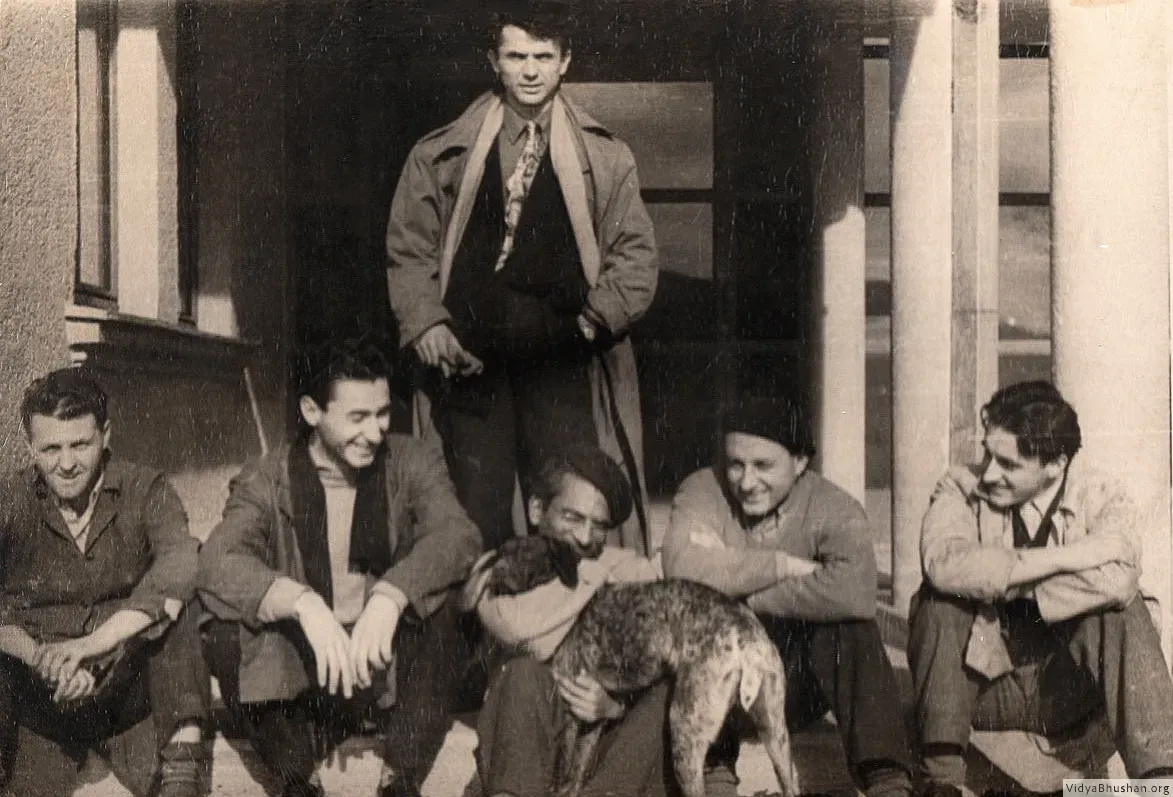
Bhushan’s understanding of space, composition and perspective underwent a dramatic change under the influence of Milunovic and the exposure to the work of the Impressionsists and Post-Impressionists. His palette turned to a predominance of vermilion, cobalt blue, ultramarine, violet, red and yellow ochre and zinc while his tools to hard bristled brushes and palette knife. Formalist concerns held more import over the narrative.